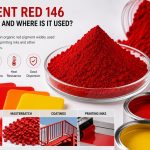
Pigment Red 146: Properties, Applications, and Technical Guide
Pigment Red 146 is an important organic red pigment widely used in plastics, coatings, printing inks, and other industrial applications. Known for its strong red shade, good coloring strength, and balanced performance, Pigment Red 146 is often selected by manufacturers looking for a reliable pigment for demanding color applications.
For pigment manufacturers, plastic processors, coating producers, and ink manufacturers, understanding the properties, applications, compatibility, and processing characteristics of पिगमेन्ट रातो १66 can help improve color consistency and finished-product quality.
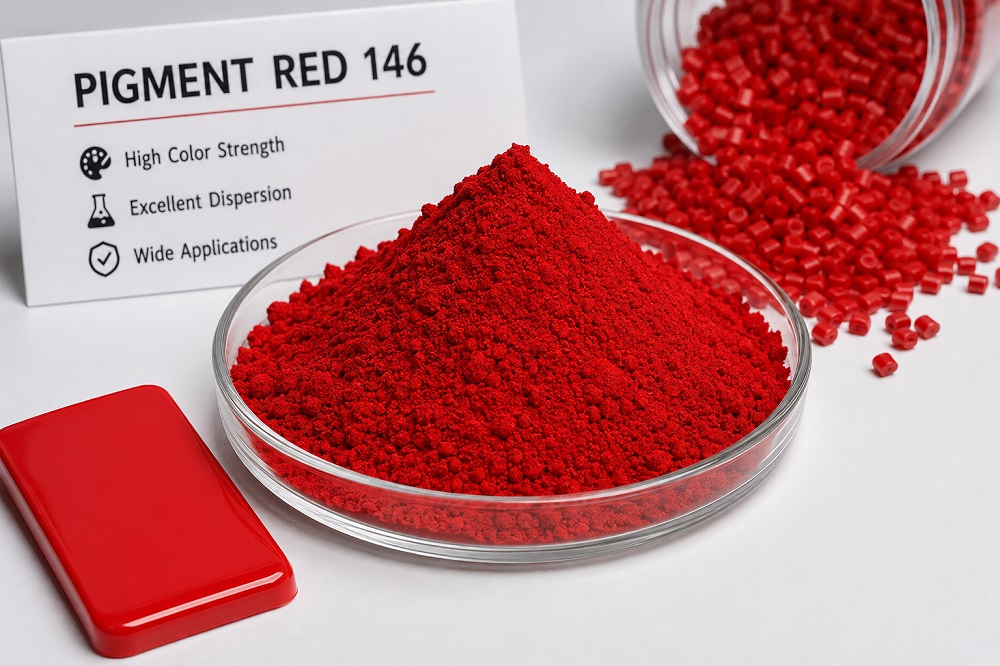
What Is Pigment Red 146?
Pigment Red 146 is a synthetic organic pigment belonging to the azo pigment family. It is commercially available in different grades designed for specific applications, allowing manufacturers to select a suitable product according to requirements such as color strength, dispersion, heat resistance, lightfastness, and processing conditions.
Key Characteristics of Pigment Red 146
Pigment Red 146 is valued for its bright red coloration and good overall performance. Depending on the grade and application, it can provide a combination of strong tinting strength, good dispersion, and satisfactory resistance to heat, light, and chemicals.
- Bright and attractive red shade
- Good coloring strength
- Good dispersion characteristics
- Suitable for many thermoplastic applications
- Applicable to coatings and printing inks
- Good overall processing stability
- Available in different commercial grades
Pigment Red 146 Properties
The technical properties of Pigment Red 146 can vary depending on the manufacturing process, particle size, surface treatment, purity, and specific commercial grade. Therefore, buyers should always review the technical data sheet provided by the pigment manufacturer before selecting a grade.
Color Performance
One of the main reasons Pigment Red 146 is used in industrial coloring applications is its strong and consistent red color. Its coloring performance makes it suitable for products where stable color development and good visual appearance are important.
गर्मी प्रतिरोध
Heat resistance is an important consideration when selecting pigments for plastics. Pigment Red 146 can be used in various plastic processing applications where the pigment needs to withstand elevated processing temperatures. The actual temperature resistance depends on the pigment grade and polymer system.
Lightfastness
For outdoor products and applications exposed to light, lightfastness is an important pigment property. Different grades of Pigment Red 146 may provide different levels of resistance to fading. Manufacturers should select the appropriate grade according to the expected exposure conditions of the finished product.
Chemical Resistance
Pigment performance can also be affected by acids, alkalis, solvents, plasticizers, and other formulation components. Pigment Red 146 grades intended for industrial applications are selected according to their compatibility with the relevant formulation and processing environment.
Pigment Red 146 Applications
Pigment Red 146 can be used across several industries because of its combination of color performance and processing properties. The most common application areas include plastics, coatings, printing inks, and other industrial coloring systems.
Pigment Red 146 for Plastics
Plastics are one of the important application areas for Pigment Red 146. It can be incorporated into polymers to produce red-colored plastic products and components.
Potential plastic applications include packaging materials, consumer products, household products, molded components, plastic profiles, and other colored plastic products.
When using Pigment Red 146 in plastics, manufacturers should consider polymer compatibility, processing temperature, dispersion, pigment concentration, migration requirements, and the desired final shade.
Pigment Red 146 for Coatings
Pigment Red 146 can also be used in industrial coating systems where a stable red color and suitable pigment performance are required.
Applications may include industrial coatings, decorative coatings, metal coatings, general-purpose coatings, and other formulated coating systems. The appropriate grade should be selected based on the resin, solvent system, outdoor exposure, and performance requirements.
Pigment Red 146 for Printing Inks
Printing ink manufacturers may use Pigment Red 146 to achieve attractive red shades in different printing applications. Pigment dispersion is particularly important because poor dispersion can affect color strength, gloss, transparency, and printing consistency.
The pigment grade should therefore be selected according to the printing process, ink formulation, substrate, and required color performance.
Advantages of Using Pigment Red 146
Strong Coloring Performance
A high-quality Pigment Red 146 can provide strong color development, helping manufacturers achieve the required shade with an efficient pigment loading.
Versatile Industrial Applications
Its application range covers plastics, coatings, inks, and other industrial coloring systems, making Pigment Red 146 a versatile option for manufacturers serving different markets.
Good Dispersion Potential
Properly manufactured pigment particles can offer good dispersion performance when processed with suitable equipment and formulation systems. Good dispersion helps improve color uniformity and finished-product appearance.
Consistent Color Quality
Color consistency is essential for large-scale production. A reliable Pigment Red 146 supplier should provide stable quality between production batches to help customers maintain consistent product colors.
How to Select the Right Pigment Red 146 Grade
Not every Pigment Red 146 grade is suitable for every application. Buyers should evaluate the complete technical requirements before placing a bulk order.
Application Requirements
First, identify the final application. A pigment intended for plastics may require different performance characteristics from one designed for printing inks or coatings.
Processing Temperature
For plastic applications, the pigment must be compatible with the processing temperature of the selected polymer. Injection molding, extrusion, blow molding, and other processes may have different thermal requirements.
Dispersion Requirements
Good dispersion is essential for achieving uniform coloration. Manufacturers should consider particle characteristics, pigment concentration, carrier compatibility, and processing equipment.
Color Shade Requirements
Different customers may require different red shades, undertones, transparency levels, or tinting strengths. A supplier with multiple pigment grades can help customers select the most suitable option for their formulation.
Regulatory and Compliance Requirements
For international markets, regulatory compliance can be an important part of pigment selection. Buyers should request relevant technical and compliance documentation from the supplier to ensure that the pigment meets the requirements of the intended application and destination market.
Pigment Red 146 Manufacturing and Quality Control
The performance of an organic pigment depends not only on its chemical structure but also on manufacturing technology and quality control. Consistent production conditions can help maintain stable particle characteristics, color strength, purity, dispersion, and batch-to-batch consistency.
Raw Material Control
Reliable raw material management is an important part of producing consistent pigment. Controlled raw materials can contribute to stable pigment quality and reduce variations between production batches.
Particle Size and Dispersion Control
Particle characteristics can have a significant effect on color development and dispersion. Manufacturers should control production and finishing processes to achieve the required pigment performance.
Batch-to-Batch Consistency
For industrial customers, consistent color between different production batches is critical. Quality control procedures should therefore include appropriate testing of color strength, shade, moisture, physical properties, and other relevant parameters.
Pigment Red 146 for Global Industrial Markets
Demand for high-performance organic pigments continues to come from industries such as plastics, coatings, printing inks, packaging, and consumer products. International buyers often look for pigment suppliers that can provide stable quality, competitive pricing, technical support, and reliable bulk supply.
When purchasing Pigment Red 146 internationally, customers should evaluate more than the unit price. Product consistency, technical documentation, packaging, production capacity, lead time, quality control, and communication are all important factors in establishing a reliable supply relationship.
Bulk Pigment Red 146 Supply
For large-volume applications, purchasing Pigment Red 146 directly from an experienced manufacturer can provide advantages in supply stability and technical communication. Buyers can discuss application requirements, packaging specifications, annual demand, and customized product requirements with the supplier.
Why Work With a Pigment Red 146 Manufacturer?
Working directly with a Pigment Red 146 manufacturer can be beneficial for customers who require regular supply or technical assistance. Manufacturers can often provide detailed product information, application recommendations, quality documentation, and different packaging options.
Technical Support
Professional pigment suppliers can help customers evaluate pigment grades according to polymer systems, coatings, ink formulations, processing temperatures, and final product requirements.
Stable Supply Capacity
For manufacturers with continuous production requirements, stable supply is essential. A qualified pigment manufacturer should have appropriate production capacity and quality management systems to support long-term orders.
Customized Solutions
Different industries have different pigment requirements. Depending on production capabilities, pigment manufacturers may provide customized grades or recommend suitable products based on color, dispersion, heat resistance, lightfastness, and application requirements.
Frequently Asked Questions About Pigment Red 146
What is Pigment Red 146 used for?
Pigment Red 146 is used in applications such as plastics, coatings, printing inks, and other industrial coloring systems. The specific application depends on the performance requirements of the selected pigment grade.
Is Pigment Red 146 suitable for plastics?
Yes. Pigment Red 146 can be used for various plastic applications. However, the appropriate grade should be selected according to the polymer type, processing temperature, dispersion requirements, and desired color performance.
How do I choose a Pigment Red 146 supplier?
When choosing a Pigment Red 146 supplier, consider product consistency, technical specifications, quality control, production capacity, certifications and compliance documentation, packaging, lead time, and technical support.
Can Pigment Red 146 be used in coatings and inks?
Yes. Suitable Pigment Red 146 grades can be used in various coating and printing ink systems. Formulation compatibility and dispersion performance should be evaluated before commercial production.
Can Pigment Red 146 be purchased in bulk?
Yes. Pigment Red 146 is available for industrial bulk purchasing from qualified pigment manufacturers and suppliers. Buyers should communicate their annual consumption, application, packaging requirements, and technical specifications when requesting a quotation.
Conclusion
Pigment Red 146 is a versatile organic red pigment with applications across plastics, coatings, printing inks, and other industrial coloring systems. Its strong red color, coloring performance, dispersion potential, and overall processing characteristics make it an important choice for manufacturers seeking reliable red pigmentation.
Choosing the right Pigment Red 146 grade requires consideration of the application, polymer or resin system, processing temperature, dispersion requirements, color shade, light exposure, chemical environment, and regulatory requirements. Working with an experienced Pigment Red 146 manufacturer can help buyers obtain consistent quality, stable supply, and technical support for long-term production.
सम्बन्धित उत्पादनहरु
 How to Choose the Right Pigment Yellow 97 for Plastics, Coatings, and Inks
- Pigment Red 177 vs Pigment Red 170: Which Organic Red Pigment Should You Choose?
- What Is Pigment Red 177? Properties, Applications, and Benefits Explained
- Pigment Red 177 Technical Data: Heat Resistance, Light Fastness, and Chemical Stability
- Pigment Red 177 Buying Guide: Everything Importers Need to Know Before Purchasing
- Why Pigment Red 177 Is Ideal for Plastic Coloration and Masterbatch Manufacturing
- What Is Pigment Red 146 and Where Is It Used?
- Pigment Yellow 97: Properties, Applications, and Technical Guide
- How to Choose a Reliable Pigment Red 177 Manufacturer in China
- Top Applications of Pigment Red 177 in Automotive Coatings, Inks, and Plastics